
Comparing knockdown texture vs smooth pool deck finishes helps you choose a surface for wet traction, barefoot comfort and upkeep. The finish on your pool deck does more than set the look of your backyard. It decides how safe the deck is when it’s wet, how it feels on bare feet in July, and how much time you spend cleaning it. For most San Jose homeowners, the choice comes down to two directions: a textured knockdown finish or a smooth, sleek surface.
Both can look great. They behave very differently around water, though, and the right one depends on who uses your pool, how much sun the deck gets and the style you’re after. This guide compares knockdown texture and smooth finishes on the things that matter most for a pool deck, explains where each one makes sense, and shows how many homeowners combine the two.
If you already know you want a textured, slip-resistant surface, our knockdown texture finishes page covers how we install it.

The Short Answer: What Is the Best Finish for a Concrete Pool Deck?
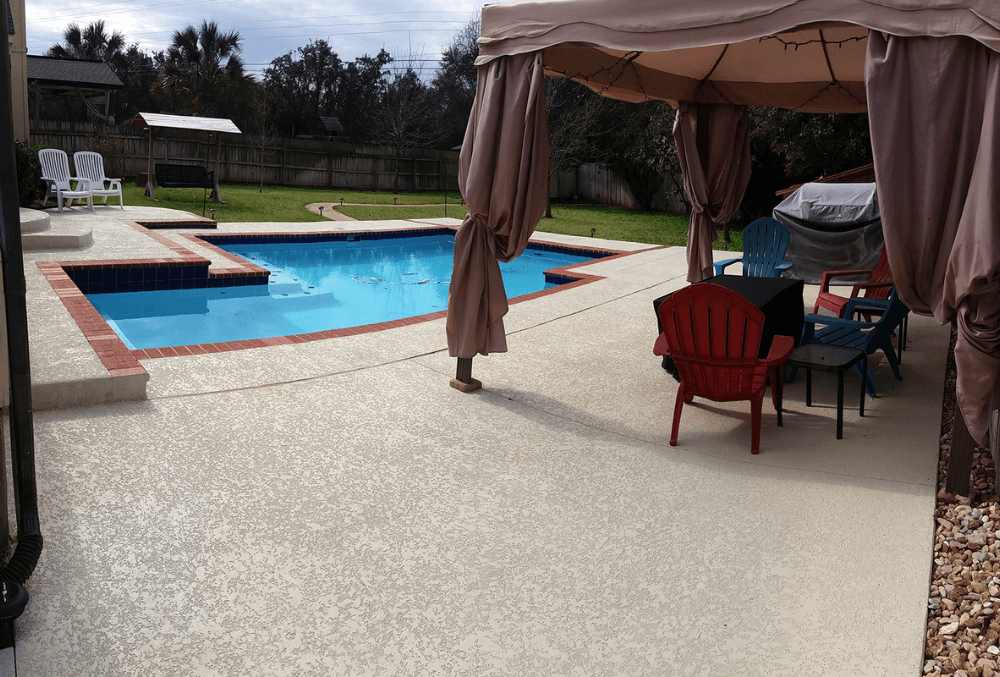
For the walking surface around a pool, knockdown texture is usually the better choice. Its soft, raised pattern gives bare feet grip when the deck is wet, it stays comfortable underfoot, and it hides dirt, water spots and small imperfections well. That’s why it’s one of the most popular finishes for residential pool decks in the South Bay.
A smooth finish delivers a clean, modern look, but bare smooth concrete or a glossy sealed surface can get slippery when it’s wet. If you love the smooth look, it can still work on a pool deck when it’s made safer with a fine texture, a light broom finish or an anti-slip additive in the sealer, or when it’s used for borders and accents rather than the main walking area.
What Is a Knockdown Texture Finish?

Knockdown texture is a decorative finish applied as a thin, acrylic-modified cement overlay over an existing concrete slab. The installer sprays or splatters the overlay onto the prepared surface, then lightly passes a trowel over it before it sets. That “knockdown” step flattens the tops of the splatter into a soft, irregular pattern that looks a little like stucco or natural stone.
Once it cures, the surface is colored, sealed and ready for foot traffic. Because it bonds to the concrete you already have, knockdown is a popular way to refresh a worn or outdated deck without tearing it out. It’s one of several decorative concrete finishes that can be tinted to match your home, coping and landscaping.
Smooth Concrete Pool Deck Pros and Cons
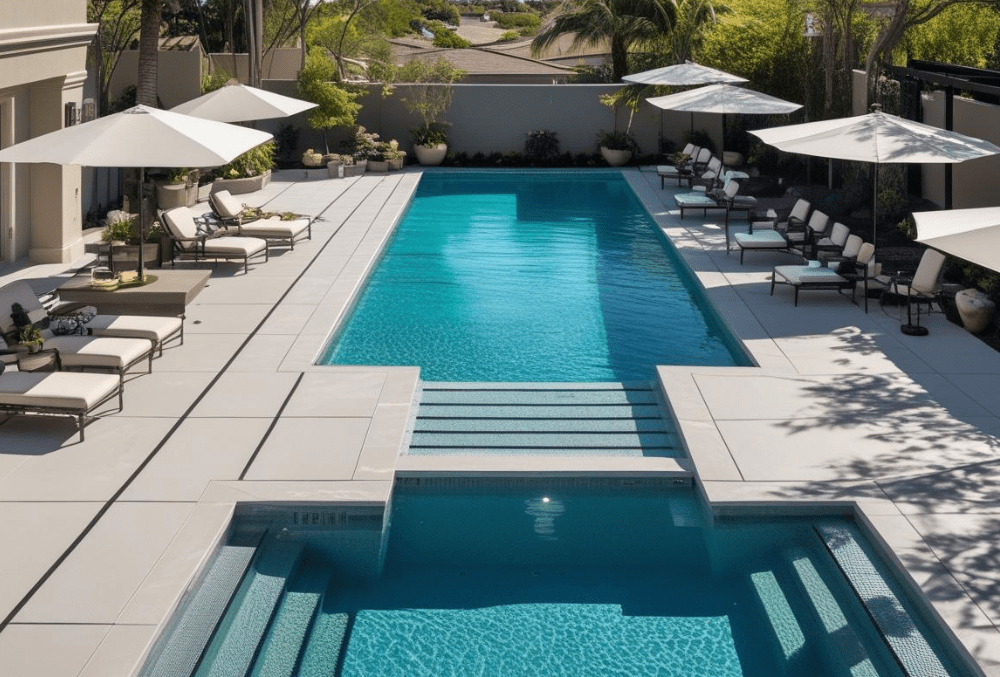
“Smooth finish” covers a few different surfaces that share a flat, uniform look:
- Steel-troweled concrete: a new slab finished with a trowel until the surface is dense and smooth
- Smooth overlays and micro-toppings: thin cement-based coatings troweled flat over existing concrete for a seamless, modern surface (see our concrete overlays page)
- Sealed or stained smooth concrete: a smooth surface finished with a sealer or stain that adds color and sheen
- Light broom finish: technically lightly textured, but it reads as a plain, smooth surface from a distance and is a common compromise near water
Smooth finishes are popular with homeowners who want a minimalist, contemporary backyard with clean lines and a uniform color.
Knockdown Texture vs Smooth Pool Deck Comparison
Feature | Knockdown texture | Smooth finish |
Slip resistance when wet | High; the raised pattern gives bare feet grip | Lower; can be slippery unless texture or anti-slip additive is added |
Comfort underfoot | Comfortable; the flattened peaks aren’t sharp | Very comfortable when dry; slick when wet |
Heat in summer sun | Depends mainly on color; texture and light acrylic finishes help | Depends mainly on color; dark or glossy sealed surfaces can get hot |
Look and style | Soft, natural, Mediterranean or stone-like | Clean, modern and minimalist |
Hides stains and imperfections | Very well | Shows stains, water spots and hairline cracks more easily |
Cleaning | Hose or pressure-wash; dirt can settle in low spots | Easy to sweep and squeegee |
Installation over an existing deck | Yes, as a bonded overlay on a sound slab | Yes, with a smooth overlay or micro-topping; or as a new pour |
Best for | Families, kids, frequent swimmers and the main walking area | Modern designs, covered areas, borders and accents |
How the Two Finishes Compare Where It Matters
Choosing a Slip Resistant Pool Deck Finish
Safety is the biggest difference. Water, sunscreen and pool chemicals make any surface slicker, and a pool deck sees all three. Knockdown’s textured surface breaks up the film of water under your feet and gives toes and heels something to grip. A smooth surface, especially one finished with a glossy sealer, gives water nothing to drain into, so it can get slick fast.
That doesn’t rule out a smooth look, but it does mean a smooth pool deck should be made safer on purpose. Common options include a light broom texture, a fine-grit anti-slip additive mixed into the sealer, or a matte rather than high-gloss sealer. If young kids, older family members or frequent guests use your pool, the main walking path should almost always have real texture.
Heat and Barefoot Comfort
San Jose summers are long, dry and sunny, so a deck that stays comfortable on bare feet matters. Color has the biggest effect on surface temperature: light, reflective colors stay noticeably cooler than dark ones, whatever the finish. Knockdown is often installed in lighter tones with acrylic-based materials, which is part of why it has a reputation for staying cooler than plain concrete. Dark surfaces generally absorb more solar heat; coating properties, shade and exposure also affect surface temperature.
If heat is your top concern, pick a light color first, then choose the texture. Our concrete colors page shows tones that suit pool areas.
Appearance and Style
Knockdown has a soft, organic look that suits Spanish, Mediterranean, ranch and traditional homes, which are common across San Jose neighborhoods. It can be tinted almost any color and laid out with saw-cut patterns that mimic tile or stone.
A smooth finish suits modern and contemporary homes with clean architecture, glass fencing and minimal landscaping. It shows off color evenly and pairs well with large-format pavers, linear drains and modern coping.
Maintenance and Durability
Knockdown is forgiving. Its texture camouflages leaves, footprints, water spots and minor wear, so the deck looks clean longer. It does need an occasional pressure wash to clear dirt from the low spots, plus resealing on the schedule your installer recommends to protect the color and surface.
Smooth surfaces are easy to sweep and squeegee, but they show everything: stains, hard-water spots, tire or furniture marks, and hairline cracks. Worn sealer is also more visible on a smooth surface, so it may need resealing more often to keep its look.
With either finish, durability depends on the slab underneath. Cracks, chips and spalling should be fixed first with proper concrete repair so the new finish has a sound base. If your deck is sinking, heaving or badly broken, read our guide on resurfacing or replacing your pool deck before choosing a finish.
Can You Combine Knockdown and Smooth Finishes?
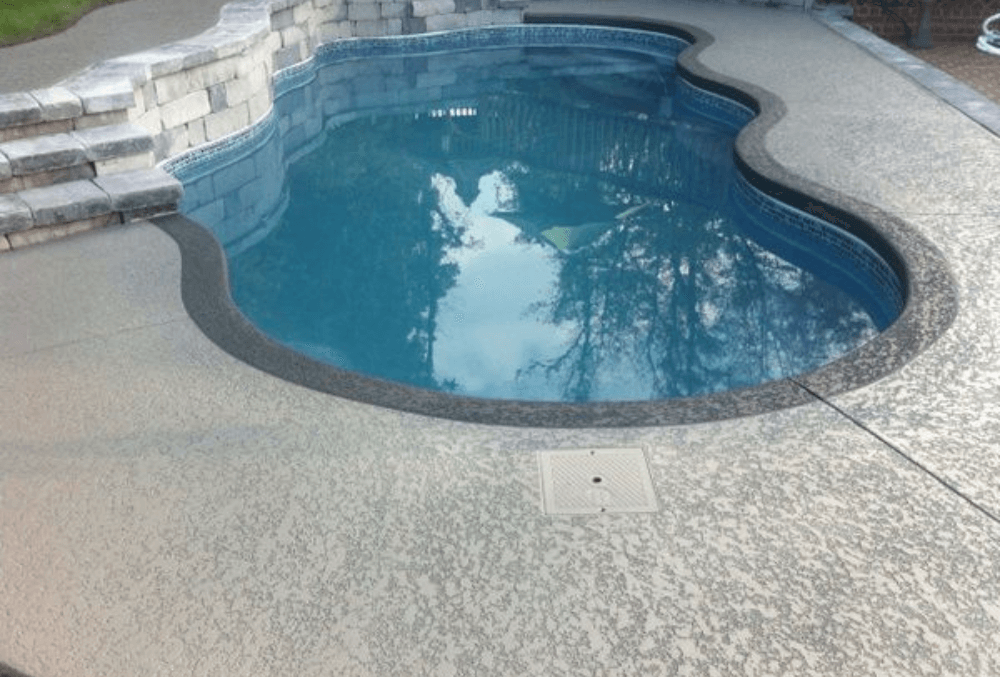
Yes, and it’s one of the most popular approaches. Many homeowners use knockdown texture on the main walking area around the pool, where grip matters most, and a smooth or lightly textured band for borders, steps, coping edges or a covered lounge area. The contrast frames the pool, adds a custom look and keeps the high-traffic wet zone slip-resistant.
Other options worth considering for the same deck include stamped concrete pool decks, which add a stone, brick or wood-plank pattern, and cool deck coatings, which are designed to reduce surface heat. Our team can walk you through how these compare on your specific deck as part of our pool deck resurfacing service.
Which Pool Deck Finish Is Right for You?
Use these scenarios as a starting point:
- You have young kids or host pool parties often. Choose knockdown texture for the main walking area.
- Your deck gets full afternoon sun. Prioritize a light color, then add knockdown texture for grip and comfort.
- You want a modern, minimalist backyard. Consider a smooth or lightly broomed finish with an anti-slip sealer, or a smooth border around a knockdown field.
- Your existing deck is stained, patched or uneven in color. Knockdown hides imperfections better than a smooth finish.
- The area is covered or rarely gets wet. A smooth finish is easier to justify under a patio cover or in an outdoor kitchen next to the pool.
- You want the lowest-maintenance look. Knockdown in a mid-tone color stays looking clean the longest.
What San Jose Homeowners Should Consider
- Long pool season. Warm weather from late spring into fall means a lot of wet, barefoot traffic, which makes slip resistance a priority.
- Sun and UV. Strong summer sun fades color and breaks down sealers, so UV-stable sealers and lighter colors help the finish last.
- Winter rain and trees. Leaves and runoff from oaks and other mature trees common in many San Jose yards can leave the deck damp and slick in winter. Texture and good drainage help.
- Older decks. Many pool decks from past decades have worn cool deck coatings, patchwork repairs or settling cracks that need to be addressed before any new finish goes on.
- HOA and design rules. Some communities have guidelines on colors or finishes, so check before you commit.
What Affects the Cost of a Knockdown or Smooth Pool Deck Finish?
There isn’t a reliable one-size-fits-all price for a pool deck finish, because the cost depends on your deck and the look you choose. The main factors are:
- Size and shape of the deck, including curves, steps and how much coping and edging there is
- Condition of the existing concrete and how much crack, chip or spall repair it needs
- Removal of old coatings, cool deck material, paint or sealers
- The finish system: knockdown overlay, smooth overlay or micro-topping, or a new pour
- Decorative details: multiple colors, saw-cut patterns, borders or combined finishes
- Sealer type and any anti-slip additives
- Drainage corrections and access for the crew and equipment
When you compare quotes, ask each contractor what’s included: how the surface is prepared, which overlay or coating system they use, how many coats go down, what sealer they apply and how often it will need resealing. Two quotes for a “knockdown pool deck” can describe very different products and prep work. That’s why it’s important to ask the installer directly for an itemized estimate based on an in-person look at your deck, rather than relying on online price charts. San Jose Concrete Resurfacing offers a free, no-obligation evaluation and estimate.
Frequently Asked Questions
For the main walking area, knockdown texture is usually the better choice because its raised pattern gives bare feet grip when the deck is wet, it stays comfortable underfoot, and it hides dirt and small imperfections. It’s applied as a bonded overlay, so it can usually go over an existing sound concrete deck.
A smooth concrete or glossy sealed pool deck can be slippery when wet. It can be made safer with a light broom texture, a matte sealer or an anti-slip additive mixed into the sealer. For the main walking area around a pool, a textured finish such as knockdown is usually the safer choice.
Light colors generally absorb less solar heat than dark colors with either finish. Knockdown texture alone does not guarantee a cool surface; coating properties, sun exposure and shade also affect barefoot comfort.
Usually, yes, as long as the existing slab is structurally sound. The surface is cleaned, repaired and prepared, then the knockdown overlay is applied, colored and sealed. Decks that are sinking, heaving or badly broken may need repair or replacement first.
Rinse it regularly with a hose, use a soft-bristle brush with a mild cleaner for spots, and pressure-wash on a low setting occasionally to clear dirt from the low areas of the texture. Resealing on the schedule your installer recommends protects the color and surface.
Yes. A common design uses knockdown texture on the main walking area for grip and a smooth or lightly textured band for borders, steps or covered areas. The contrast frames the pool and keeps the wet zone slip-resistant.
Pricing depends on the size and shape of your deck, the condition of the concrete, repairs, coating removal, the finish system and decorative details, so an accurate number requires an on-site look. San Jose Concrete Resurfacing offers a free, no-obligation evaluation and itemized estimate. Call (408) 709-7256 to schedule yours.
Knockdown texture can improve traction, but it can still become slippery when wet or contaminated by sunscreen, algae or debris. Finish texture, sealer, drainage and maintenance all affect grip; no pool deck finish is slip-proof.
Find the Right Finish for Your Pool Deck
The best pool deck finish balances safety, comfort and the look you want, and it’s easier to choose when someone has actually seen your deck. Our team will inspect your concrete, show you knockdown and smooth samples in colors that suit your home, and recommend the finish that fits how your family uses the pool. Browse our knockdown texture project gallery and pool deck gallery, then call (408) 709-7256 or request your free pool deck estimate.